


Leaving a tip after a meal has become second nature for many South Africans. Whether it's 10%, 15% or even more, customers often reach for their wallets without giving it much thought. But an increasingly common question is emerging: if restaurant staff are already paid a wage, should tipping still be expected?
Unlike countries such as the United States, where many waiters rely heavily on tips because of low base pay, South Africa's restaurant industry generally operates differently. Many establishments pay their waiters a salary or basic wage, although in some cases tips still make up a significant portion of their monthly income.
That has sparked a broader debate about who should be responsible for rewarding good service. Should customers effectively subsidize staff wages, or should restaurant owners ensure employees are fairly compensated without relying on gratuities?
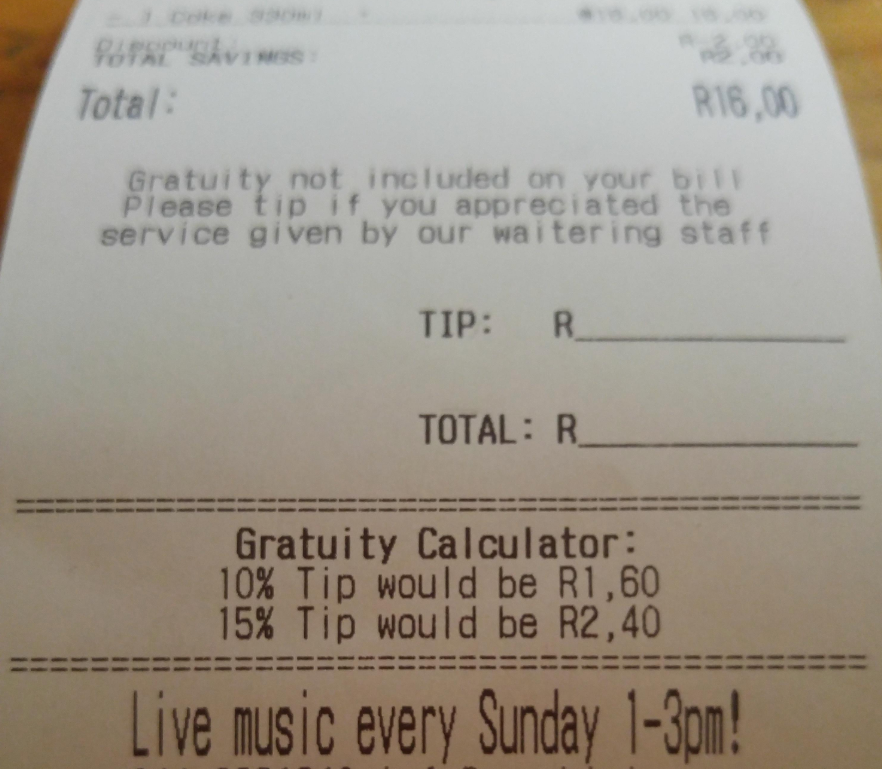
Supporters of tipping argue that exceptional service deserves recognition. A friendly waiter who goes the extra mile can transform an ordinary meal into a memorable experience, and a tip is often seen as a personal thank you rather than an obligation.
Critics, however, question why diners should feel pressured to pay extra after already covering the cost of the meal, service charges and rising menu prices. They argue that providing good service is part of the job description, just as customers do not tip supermarket cashiers, retail assistants or bank tellers for doing their work well.
Others believe the answer lies somewhere in the middle. A tip should never be compulsory, they say, but should remain a voluntary reward for genuinely outstanding service rather than an expectation attached to every bill.
As the cost of living continues to climb and dining out becomes more expensive, the conversation around tipping is likely to grow louder.
So, where do you stand? Should tipping remain part of South African dining culture, or is it time for restaurants to rethink how service staff are rewarded?


Discussion